
Rubber is an elastome a polymer with viscoelastic properties—characterized by weak intermolecular forces, low Young’s modulus, and high failure strain compared to other materials.
This unique combination allows rubber to undergo significant deformation under stress and return to its original shape upon release.
Key Properties of Rubber:
Elasticity: Rubber’s elasticity stems from its molecular structure. In a relaxed state, rubber consists of tangled polymer chains. When stretched, these chains align, and upon release, they revert to their original, disordered state, providing rubber’s characteristic elasticity.
Vulcanization: Natural rubber contains weakened allylic C–H bonds, making it amenable to vulcanization—a process that introduces cross-links between polymer chains using sulfur. This enhances rubber’s strength, elasticity, and durability.
Temperature Sensitivity: Rubber’s properties are temperature-dependent. Cooling rubber below its glass transition temperature reduces its elasticity, leading to brittleness. Conversely, heating can increase elasticity but may also cause degradation if excessive.
Chemical Resistance: Rubber’s resistance to chemicals varies. While it resists many solvents, it can be susceptible to ozone cracking and degradation by certain chemicals, necessitating careful selection for specific applications.
Applications and Considerations:
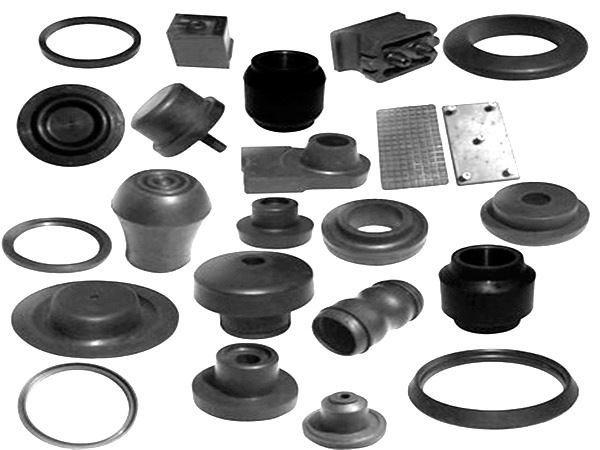
Rubber’s unique properties make it suitable for a wide range of applications, from tires and seals to medical devices and consumer products. However, factors such as temperature, chemical exposure, and mechanical stress can influence its performance. Understanding these properties is crucial for selecting the appropriate rubber material for specific applications.